


How many times has a homeowner told their agent they don’t need flood insurance because they’re not in a high-risk flood zone? And…how many times has their agent agreed with them?
That conversation is a missed opportunity. Clients deserve to understand flood risk better, and it’s our goal to help our retail agents understand why and how flood insurance beyond the FEMA designated high risk flood zones is important for their clients.
Walking a client through their true flood risk starts with being able to communicate flood risk effectively. The Amwins Flood Team is here to help.
What are FEMA flood zones?
Almost everyone has heard of FEMA flood zones by now, but many don’t understand exactly what they are. Even though they are called “high-risk zones,” FEMA flood zones are not actually risk zones.
FEMA created these special flood hazard areas (flood zones) as an easy way to define compulsory purchase requirements for banks and apply “blanket rates” across a single geographical boundary. These boundaries are created and re-created through a long and convoluted process that involves a significant amount of outside (non-data driven) input and manipulation before the final maps are published.
FEMA flood zones are also broad, which means they don’t capture any single location’s true flood risk, only an estimation that within that “zone” it would be either lower risk (anything with less than a 1% annual chance of flooding) or high risk (anything with greater than a 1% annual chance of flooding).
There can be risks outside of the high-risk flood zone that carry tremendous risk (still greater than 1% annual chance of flooding), but are not part of the larger zone where flooding is expected (and vice versa; there can be lower risk properties in a designated FEMA flood zone).
If the property is outside the flood zone does that mean there’s no risk?
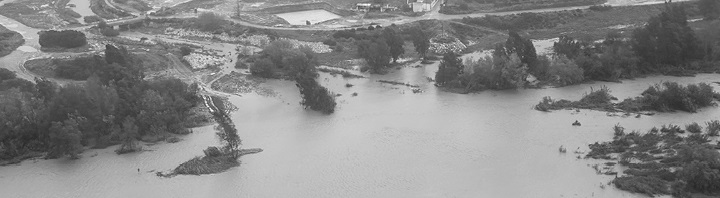
During a flood, the water will not stop where compulsory purchase of flood insurance requirement stops. Properties near high-risk flood zones may also flood. In fact, for every flood, about three quarters of flooded properties are outside high-risk flood zones, and about 85% of damaged buildings have no flood coverage.
What does this mean for you and your clients? It means that flooding can happen everywhere, not just within a FEMA designated high-risk zone. Floods are, in fact, the most common and widespread of all weather-related natural disasters in the United States and they are not contained to high-risk flood zones.
What are my clients’ options beyond the flood zones?
In general, clients outside the FEMA high-risk flood zones typically have more competitive options for coverage since they are in less flood prone areas. Underwriters, including those at Amwins, are always improving measuring and pricing risk more accurately, which can mean better prices for clients.
While the cost of coverage may initially be a shock to an insured because they have “never flooded before” or because it seems expensive for a single peril, remember the following:
- Flooding is the most common and widespread of all weather-related natural disasters.
- Flooding can occur everywhere.
- Just because a flood has not happened before in a given area, doesn’t mean it can never happen.
- FEMA flood zones don’t accurately reflect any one location’s true flood risk.
- You can always inquire about why a risk is priced a certain way to get a better understanding as to why the price is high for a property that may seem like a lower-risk option.
We help you win
The Amwins Flood Team is focused on improving options for properties outside FEMA zones. We are always enhancing our ability to measure lower levels of risk, which enables us to deliver lower rates and premiums to clients everywhere.
The insights shared here, paired with tools like Amwins IQ, can help you more easily access and apply those solutions for your clients in real time.