Lockton + Amwins
We're here as your trusted partner through industry change. Our goal is to help you win.

Lockton + Amwins
We're here as your trusted partner through industry change. Our goal is to help you win.
Let's talk about how we can partner for your success.
Contact your Amwins broker or underwriter to discuss account needs. If you don't have any Amwins relationship, contact:
Amwins delivers tailored solutions backed by

$44.5B
annual premium placements
2,200,000
submissions received annually
43,000
underwriter relationships
Areas of specialty

Data & Analytics
Amwins DNA is the wholesale industry’s most in-depth collection of insurance data. Our data is used to support our broker/underwriter teams and retail clients with market intelligence, benchmarking reports, and much more.

Amwins InstantQuote
Amwins IQ provides firm, bindable quotes from multiple carriers within minutes. Targeting small and middle market businesses, our digital solutions combine the ease and convenience of online quoting with the scale of the nation’s largest wholesaler.

International capacity
With boots on the ground in London and Bermuda, our colleagues at Amwins Global Risks and Amwins Bermuda have direct access and strong relationships within these key international marketplaces.
Market insights from Amwins
Our insight on emerging issues and trends in the marketplace gives you an advantage with your clients and helps you prepare them for what lies ahead.
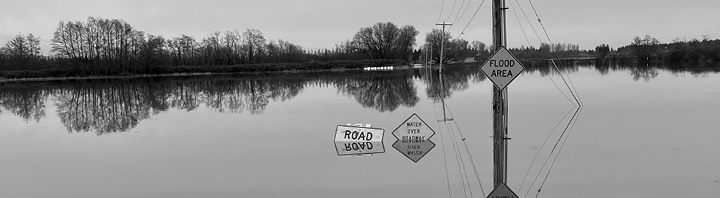
The Reshaping of U.S. Flood Coverage
- Flood risk is expanding nationwide and challenging traditional assumptions about exposure, with 20%–25% of claims occurring outside designated high-risk zones.
- Environmental changes and infrastructure limitations, such as heavier rainfall and aging drainage systems, are increasing both the frequency and severity of flood losses.
- A significant protection gap remains, requiring stronger public-private collaboration, better technology adoption, infrastructure investment and increased awareness to close it.
The U.S. flood insurance market is currently undergoing a shift – driven by regulatory changes, Federal Emergency Management Agency (FEMA) flood map revisions and increased participation from private insurers. What was once a federally dominated market is now a more dynamic ecosystem, where public and private solutions are converging to meet a rapidly changing risk landscape.
The National Flood Insurance Program (NFIP) continues to provide foundational coverage for residential and small commercial properties. However, the growing complexity of flood exposure and limitations in standardized federal coverage have accelerated demand for more flexible, responsive private market solutions.
Expanding flood risk
Flooding is no longer confined to designated high-risk zones. Increasingly, it is a nationwide exposure shaped by climate patterns, land use and infrastructure limitations.
According to FEMA, roughly 20% to 25% of flood claims occur outside mapped Special Flood Hazard Areas, challenging long-standing assumptions about where risk resides. Events like Tropical Storm Helene, which brought historic rainfall of more than 30 inches to western North Carolina, caused catastrophic flooding in a region where it’s estimated only approximately 2% had flood insurance.
Key loss drivers
Flood losses are increasingly driven by the intersection of environmental change and infrastructure limitations. Key factors include:
- More intense rainfall events: Climate change has led to more heavy rainfall events in short durations, overwhelming municipal drainage and flood-control systems.
- Sea-level rise and coastal backflow: Higher sea levels and more frequent coastal flood events cause outfalls and drainage systems to become submerged.
- Aging stormwater infrastructure: Many urban drainage systems rely on gravity-based flow, which can be compromised by debris that clogs drains and pipes.
- Urbanization and impervious surfaces increasing runoff: Expanding paved areas reduce the land’s natural ability to absorb rainfall, increasing surface runoff and flood frequency.
- Land subsidence and erosion weakening protective systems: Erosion and soil degradation around coastlines and riverbanks expose stormwater and transportation infrastructure.
- Community and economic impacts: Even minor flooding events can disrupt transportation, reduce access to goods and services, and harm property values and tourism.
These factors are not isolated; they compound one another. For example, heavy rainfall in urban areas with outdated infrastructure can produce losses comparable to coastal storm surge events. The result is not just higher frequency of claims, but greater severity and longer recovery timelines.
Ongoing regulatory change
Regulatory changes play a pivotal role in redefining both risk and responsibility. FEMA flood map revisions continue to expand the number of properties classified within high-risk zones. As of the first quarter of Fiscal Year 2026, the mapping program now covers communities representing approximately 98% of the U.S. population, with ongoing updates aimed at improving modeling accuracy and risk transparency.
At the same time, Risk Rating 2.0, FEMA’s updated pricing methodology, has introduced more actuarially sound, property-specific rates. While this improves long-term program sustainability, it has also raised concerns about affordability, particularly in coastal and lower-income communities.
With the NFIP currently authorized through September 30, 2026, ongoing reauthorization discussions continue to focus on balancing fiscal solvency with accessibility, an increasingly difficult equation as climate risks intensify.
Emerging technologies and modeling tools
Advancements in modeling and analytics are changing how flood risk is assessed and managed. Organizations are leveraging AI and machine learning to integrate satellite imagery, real-time weather data and terrain modeling into predictive frameworks. These tools provide:
- AI and machine learning for flood forecasting: Advanced machine learning models like Floodbase are increasingly used to analyze multi-source data to forecast floods in real time.
- Satellite and remote sensing tools: Near-real-time satellite observation platforms are used to monitor rainfall, soil moisture and land surface conditions.
- Distributed hydrological modeling: These models simulate runoff and sediment transport processes, providing detailed insights into flood dynamics under various rainfall conditions.
- Integrated hydro-geotechnical models: This model combines hydrological parameters (soil moisture, streamflow) with geotechnical modeling to assess combined flood–landslide events.
- GIS-based and 3D visualization systems: Geographic Information Systems (GIS) and three-dimensional (3D) hydrodynamic visualization tools allow planners to simulate drainage flows, surface inundation and flood extent under different storm scenarios.
- Nature-based and sustainable solutions modeling: Emerging simulation platforms also model the impact of green infrastructure (such as wetlands and retention basins) on flood mitigation strategies.
Together, these technologies represent a shift toward data-integrated, AI-enhanced and spatially explicit modeling frameworks to deliver more accurate, localized flood predictions and support proactive infrastructure resilience planning.
Closing the protection gap
Despite market advancements, a significant protection gap remains. Millions of properties at risk of flooding remain uninsured or underinsured—particularly outside traditional flood zones.
Closing this gap will require a multi-faceted approach:
- Continued public-private partnership between NFIP and private insurers
- Greater investment in resilient infrastructure
- Expanded use of technology and predictive analytics
- Improved consumer education around evolving flood risk
The future of flood insurance will likely not be defined by a single solution, but by an integrated system that combines federal stability with private innovation.
We help you win
Flood risk today requires a deeper, location-specific view beyond traditional maps. Amwins combines advanced data, geospatial analytics and market expertise to better identify and assess individual property risk.
We partner with brokers and clients to deliver tailored flood solutions, backed by strong relationships with leading insurers. The result: flexible, best-in-class coverage built for today’s evolving flood landscape. Whether its traditional property coverage or emerging solutions like parametric, the specialists at Amwins have you covered.
- Jessica Zuiker, CPCU, ARe, VP and Amwins’ Assistant National Property Practice Leader
- Flood
- Property
- Flood
- Property