Proud Sponsor of the Big I New York Association

Proud Sponsor of the Big I New York Association
Specialty Insurance that Keeps You Ahead of Risks
As a leader in specialty insurance distribution, we've seen our retail partners through a lot — and continue to deliver the coverage solutions that meet insureds' evolving needs.
Our team of specialists in New York touts a deep bench of niche industry experts, each committed to strategizing and investing in your success.
Why Amwins?
 Market reach + clout
Exclusive capacity + products
Industry-leading technology
Recent News
Amwins Named Wholesale Broking Company of the Year at the E&S Insurer Conference & Awards 2023. Read More >
Amwins Releases Q1 2023 State of the Market Report. Read More >
Market insights from Amwins
Our insight on emerging issues and trends in the property marketplace gives you an advantage with your clients and helps you prepare them for what lies ahead.
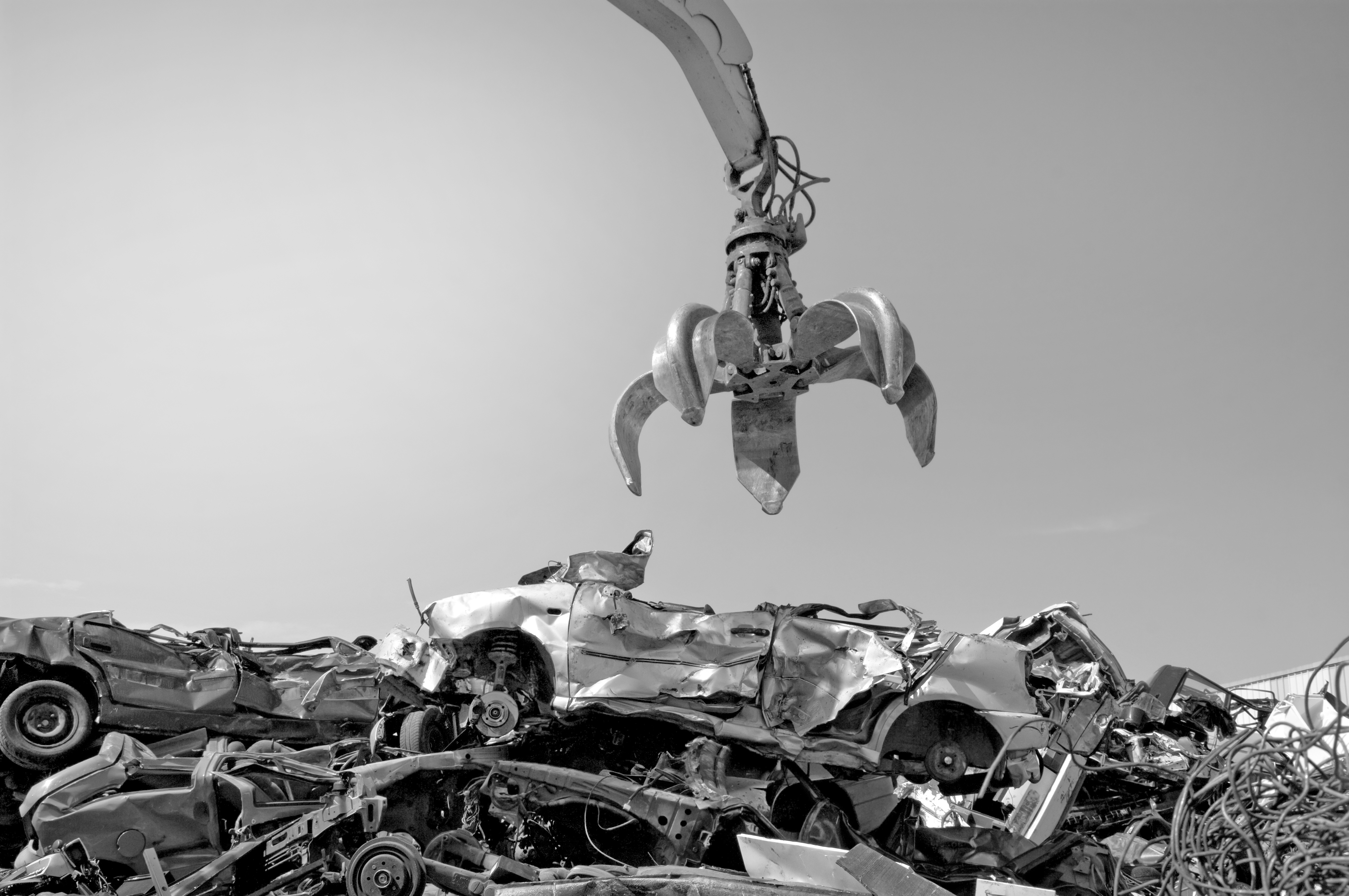
Is Your Client’s Yard Safe? Increased Fire Risk, Catalytic Converter Thefts and Driver Shortages Impact Recycling Operations
Recycling plays an essential role in driving sustainable economic growth in the United States. Recognized as one of the world’s first green industries, recycling has a positive environmental impact, and it creates and supports thousands of jobs for Americans. But recycling operations have unique risks that require careful insurance underwriting.
The RecycleGuard insurance program, part of Amwins Program Underwriters (an Amwins Underwriting operating company), has been a dedicated property & casualty insurance provider to the recycling industry for over 25 years, covering metal, plastic, glass, paper, rubber, textile, electronics, or a mixture of these commodities. The program also offers a dedicated workers’ compensation solution for recycling professionals.
Endorsed by the Recycled Materials Association (ReMA) since 2000, RecycleGuard provides coverage to more than 50% of the scrap industry in the US. The program has resolved more than 20,000 scrap yard losses and has completed more than 4,500 risk management visits to scrap yards.
In this article, we explore key risks impacting the recycling industry and how to mitigate them.
Property – Fire
Scrap yards are highly susceptible to fire and with fire claims frequency on the rise, property insurance has become the most challenging line of business for the recycling industry. This is especially true for recycling operations that shred automobile hulks (wrecked, dismantled, or inoperative vehicles) because of the highly combustible automotive shredder residue (ASR), also known as fluff. This waste is created from the shredding process and can act as a robust fuel load for fires that often result in a total loss.
There is also speculation that an increase in lithium-ion batteries (especially those from small electronics, like cell phones) in the waste and recycling stream is causing an uptick in fire frequency at scrap yards – but there is a lack of hard evidence to prove that theory.
From an underwriting standpoint
Scrap yards, especially those with ASR or paper, must focus on loss control to gain more favorable underwriting treatment. For example, insureds must have extinguishing systems in the appropriate spaces, a good clean-up process, and strong fire watch practices. When all those safety controls are in place, the risks become more palatable for underwriters to work with.
If an insured has had a fire, the underwriter will also want to know what they have done to mitigate it from happening again. Loss frequency on a property policy often means there’s a bigger issue, as frequency bodes severity.
Property – Stock
It’s no secret that the industry is dealing with an influx of catalytic converters – some of which are stolen. The precious metals contained in these parts (including platinum, palladium, and rhodium) make them attractive to thieves looking to cash in. And in most cases, the stolen parts are indistinguishable from those brought to a scrap yard legitimately.
From an underwriting standpoint
Precious metals are typically excluded from a general property policy. Add to that the risk of the item being stolen, and it can be hard to find coverage. Insureds should expect to answer questions about their catalytic converter purchase policies, including requiring proof of ownership before accepting the part.
Many states already have laws in place to address scrap metal thefts. However, with the cost of the precious metals in catalytic converters rising, we expect additional regulation may be on the horizon. According to ReMA, close to two dozen states have passed or are considering legislation to discourage these thefts.
General Liability – Premises – Operations
Recycling businesses often open their scrap yards to vendors, contractors, peddlers, and other visitors. While on site, invitees can be exposed to a myriad of hazards ranging from industrial power trucks to contractors’ equipment, excavators, moving vehicles, and more. As a result, injuries to invitees can be a main driver of significant loss on the general liability side.
From an underwriting standpoint
Scrap yard layout is critically important. Insureds should make sure that peddlers have separate, designated areas to drop off and process their scrap. Insureds should also ensure there is appropriate fencing, signage, and PPE for all people on premises.
Commercial auto – Trucking risks
Most recycling operations have fleets of commercial vehicles, a challenging risk class to insure. In recent years, the commercial transportation industry has been plagued with issues around distracted driving, a general increase in auto claim costs due to new technology, and a rise in catastrophic liability claims driven by social inflation and nuclear jury verdicts.
Recycling businesses are not immune to those trends as many utilize dump trailers, which carry a looser load (with less stability) than a full truckload (FTL) – a typical heavy truck exposure. Load securement and tarping are important when carrying materials in an open bed as lose material can fall out and damage other vehicles or cause an accident.
Another challenge is that many operations own fleets located in tough legal venues and claims jurisdictions. Scrap yards are often near metropolitan areas, with scrap material being moved to more industrial areas. That means trucks are driving through busy places and are just as susceptible to large commercial auto losses as any other type of heavy truck operation.
Driver/worker shortage
The recycling industry, like other commercial auto operators, is also dealing with a driver shortage, which many businesses are countering by hiring subcontractors to drive for them. When doing so, insureds must ensure that they have appropriate contractual risk transfer wording in their fully executed contract between themselves and the contracted party to transfer exposures and prevent significant losses.
If the subcontracted driver doesn’t have insurance or has inadequate insurance in place, the primary insured can be named in a claim or a lawsuit if anything happens. Contracts should require subcontractors to carry limits equal to or greater than the insured and should name the insured as an additional insured (AI). Underwriters will also look for hold-harmless agreements, so the liability sits with the subcontracted trucker.
From an underwriting standpoint
If insureds fail to meet this risk transfer criteria, insurers may decline the risk or implement policy exclusions. The same practices apply when recycling businesses hire temporary workers on-site. If the subcontracted workers do not have contractual risk transfer in place, insurers may exclude the exposure under the general liability policy.
Takeaway
Agents and brokers must work with clients to show underwriters they are being safety conscious. This can mean providing a narrative or executive summary on their business, including details on investments into risk management and ongoing efforts to mitigate risks.
Advocating for having the proper risk transfers in place, completing supplemental forms and complying with loss control inspections prior to placement may also be in order. At the very minimum, agents and brokers should begin the submission process 30 days before the effective date of the policy. Ideally, the process should begin 90 days out.
Partnering with the experts at Amwins can help ensure that your clients stay in business. The team at RecycleGuard knows the business inside and out. Our experts have the knowledge and market access to help you place coverage for precious metals, commercial auto, general liability and more. And in the event your client has a loss, we can help resolve a claim in the quickest and best way possible.
You can find details about RecycleGuard’s tailored solutions here.
- Susan Diecidue, Underwriting Manager for RecycleGuard
- Dan Curran, SVP and Underwriting Officer for Amwins Program Underwriters
- Featured
- Recycle
- Property
- Recycling
- Small Business
- Transportation