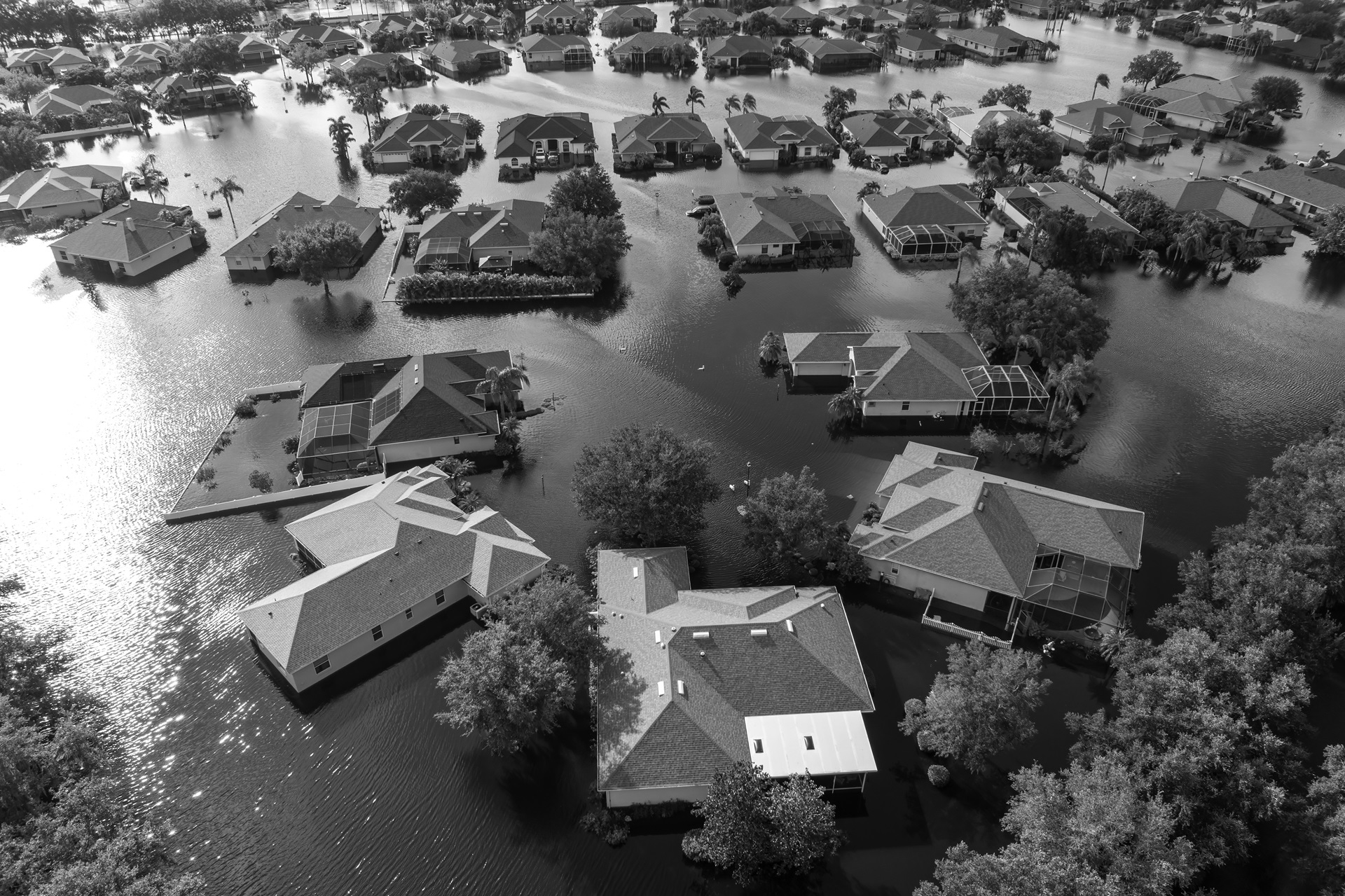



While flood may seem like a straight-forward peril, it is actually more complex. Here we share some of the key facts you should know about flood, so you can help ensure that your clients aren’t in the 85% of properties damaged in floods that have no insurance.
Three facts to know about flood coverage
- Flood is excluded from standard property policies.
- Residential properties require stand-alone flood coverage or (in rare cases) an endorsement on a standard homeowner’s policy.
- Commercial properties can sometimes be protected by an all-risk policy, though these usually carry high deductibles, and may still require a companion policy for flood.
- There is an effective date waiting period for standard flood insurance policies. NFIP coverage activates 30 days post-bind, while private options can have much shorter waiting periods – as short as one week.
- If a property sits within an A or V zone (high risk flood zones), it requires flood insurance to qualify for a mortgage or bank loan. The policy can be from either a private insurer or the NFIP.
Three obscure facts you might not know about flood coverage
- A “flood” needs to cover two acres or two adjacent properties before it’s actually a flood according to standard flood policy definition.
- Mudflow versus mudslide makes a big difference. Mudflows are often defined as rivers of mud flowing over normally dry land and are covered by most flood policies. Mudslides are often defined as mud falling down the slope of a hill or mountain, where there is no water current or source. Mudslides are not covered by most flood policies.
- Flood insurance typically comes with ICC – increased cost of compliance – coverage. If certain conditions are met, and a damaged and covered property requires extra repairs to become compliant with NFIP floodplain regulations, there can be an extra payout to the insured. ICC limits often range from $10K to $60K on standard policies.
The MOST IMPORTANT fact you need to know about flood coverage
Above everything above, there is ONE thing every single retail agent should know: Flood risk exists outside A and V flood zones.
In fact, most flood damage happens outside NFIP high risk flood zones. This means most losses are not covered and property owners will need to rebuild without NFIP assistance. You don’t want to be the one to say when a client calls with water in their house: “Sorry, you’re not covered.”
We help you win
The Amwins Flood Team is devoted to the success of our agents. Our people, technology and market relationships combine to ensure retail agents have access to the right coverage options for their clients, at the right price.