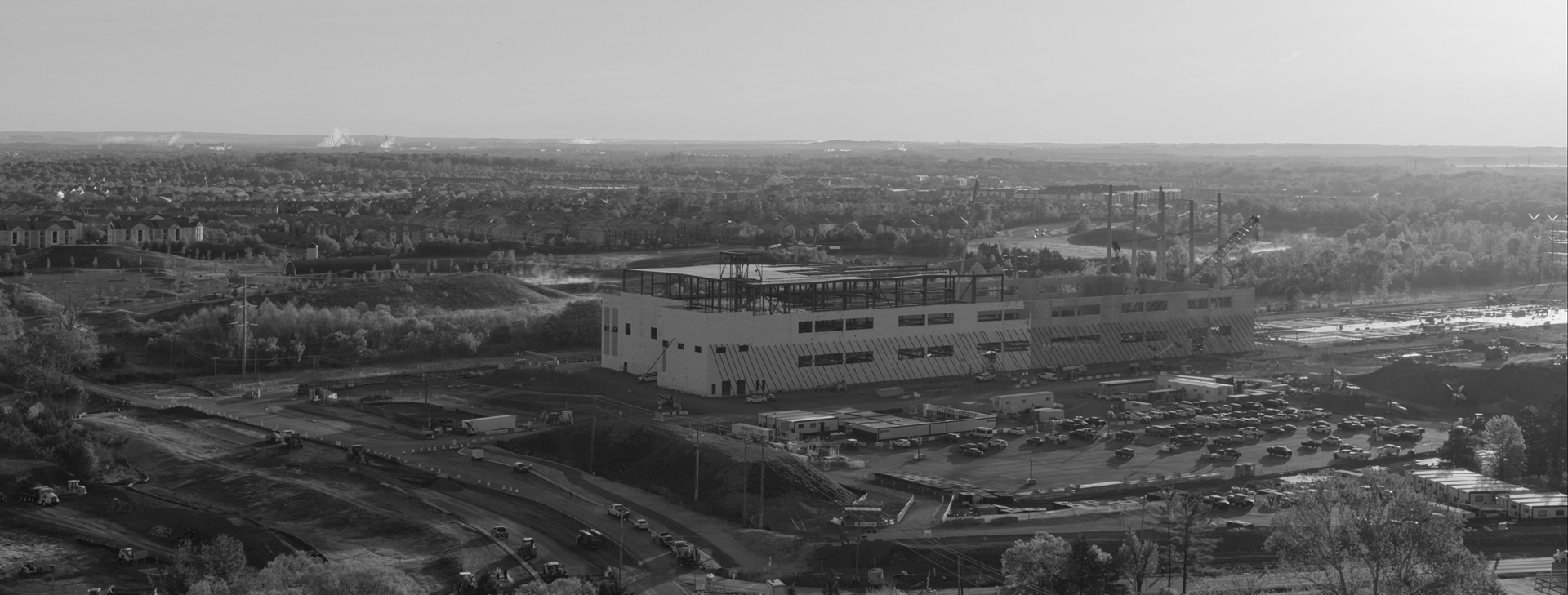



With $7 trillion in global capital expenditure expected by 2030, data centers have become one of the largest and fastest-growing asset classes in the construction, property and casualty spaces. They are also one of the most complex to insure. Here’s why.
Construction financing
A data center consists of:
- a building shell (or core)
- the balance of plant, which includes climate control and power systems (e.g., on-site substation, on-site power plant, uninterruptible power supply, automatic transfer switches and power distribution units)
- IT equipment (i.e., servers, storage systems and network systems)
Typically, the construction financing of a data center is divided between the developer financing the building shell and balance of plant and the operator financing the IT equipment.
In this scenario, the developer often chooses to lease space to a highly creditworthy tenant long-term (e.g., hyperscalers such as Alphabet, Meta, Microsoft, etc.). The funds raised through the lease are then used to help cover the cost of constructing the building shell and balance of plant, while the tenant funds the cost of the IT equipment.
However, as more hyperscalers line up to build these data centers themselves, we expect larger, combined financing deals to surface. Deals that will cover the building shell, balance of plant and IT equipment together.
A shift to combined deals will require an insurance structure to match. With capex (replacement costs) in the billions, lenders and sponsors are seeking policies with large limits.
Planning records show a greater spread of locations, including more buildout in Texas and the Southern States. A shift to locations with greater CAT exposure will stress the available capacity in the market.
Coverage complexities
In addition to shifts in construction financing, there could be confusion as to whether a data center should be considered a construction or a property risk. This complexity arises from a number of factors:
- Site selection: Geographical clusters of data centers have emerged throughout the U.S., resulting in an explosion in electricity load growth. As a result, grid interconnection queues have pushed developers to build their own on-site power plants while the grid catches up. CAT exposure complicates the type of classification given to these centers and what redundancies must be built into the grid load interconnection. Therefore, insureds will need to present clear, thorough submissions; treating this like a typical construction project won't secure the best deal.
- Training versus inference: When training models, proximity to users is unimportant: access to power, data networks, water and skilled workforce drives site selection. However, as demand for AI models rises, more data centers could be built to support inference – running the models. For faster responses, this could mean data centers will be located closer to urban centers. This brings potential casualty concerns (proximity to third-party property) and a greater risk of sabotage. These are insurable but nuanced risks.
- Planning risks: The proliferation of data centers and the perceived impact on power prices and inflation often draws criticism from residents living and working near the centers. There is a menu of products available to developers to help protect against the financial loss of a canceled lease worth billions a year.
- Contract risk: A data center might build an on-site power plant, but most will still be connected to, and need, the grid. Therefore, a timely connection can be one of the biggest scheduling risks for a project. The repercussions of a missed connection window can be devastating to a developer; a lease could be canceled by the operator if power is not supplied within the longstop date, typically 12 months following the scheduled commercial operation date. Credit insurance against the local utility is one route to transfer this risk.
- Construction timelines: On-site power plants also introduce scheduling risks. The power plant must be ready in time for the data center so both can be hot-commissioned and handed over at the same time. With construction stretching upwards of five years and delays driven largely by procurement, manufacturing capacity constraints extend well beyond chips to racks, power equipment and other critical components. This often extends a construction policy through a protracted commissioning phase, which can be expensive. Insureds should assess any pre-agreed extensions against realistic delay scenarios. Given likely delays, it is also important to note any maximum period restrictions from insurers. Treaty restrictions may limit what some capacity providers can offer.
- Phased handovers: As data centers get bigger, construction takes longer and phased handovers have become more commonplace. Ambiguity often centers on testing and commissioning. Policy wording should include clear definitions of what constitutes a covered loss under construction versus operational coverage, particularly around load-testing triggers (e.g., running a system under a required load for a set period before a trigger is considered met). Construction and operational policies should be seamless, including early operations property damage and business interruption coverage, where appropriate. Without this coverage consideration, the transition between construction and operations can become a claims quagmire.
- GPU pricing: Graphics processing units (GPUs), the AI chips at the core of a data center's IT equipment, are in high demand. And, with few suppliers and little to no price transparency, costs remain dynamic. A single data center cluster can represent as much as $10B in chips alone. A large loss event, such as a natural catastrophe near a data center cluster, could send replacement prices for labor and materials soaring. For data centers, a higher escalation provision to help with higher replacement costs could be prudent.
- Power block obligations: Hyperscalers are increasingly entering bilateral agreements with power block operators who can face steep penalties if they fail to deliver power as promised. Replacing power at spot market pricing, inability to access the grid or running diesel backup generation can create huge financial burdens when generation fails. Standard property and builders risk policies typically don’t cover these contingent obligations, making specialty products, such as forced outage insurance, worth exploring.
- Advances in technology: The latest liquid-cooled racks help reduce cooling bills and can provide underwriters with additional reassurance. Compared to forced air cooling, closed-loop liquid cooling will keep temperatures consistent through the depth of the rack. Preventing temperature differentials helps lower the risk of fire. Liquid cooled racks also help mitigate the moral hazard of data center operators running racks hot to lower cooling periods or lower load demand on new facilities. Sharing the technical detail through non-disclosure agreements (NDAs) if required is critical to help reduce insurance costs and potentially boost margins.
We help you win
Understanding that these risks don't always fit neatly into standard construction or property programs is critical for developers, tenants and brokers alike. No matter the scale or structure of the project, Amwins' energy, power and infrastructure specialists have the expertise and market access to help build the right program.
Contact an Amwins energy, power and infrastructure broker today to learn more.