Higginbotham + Amwins
We're here as your trusted partner through industry change. Our goal is to help you win.

Higginbotham + Amwins
We're here as your trusted partner through industry change. Our goal is to help you win.
Let's talk about how we can partner for your success.
Contact your Amwins broker or underwriter to discuss account needs. If you don't have any Amwins relationship, contact:
Amwins delivers tailored solutions backed by

$44.5B
annual premium placements, including $271M with Higginbotham.
2,200,000
submissions received annually
43,000
underwriter relationships
Areas of specialty
Explore our in-house solutions

Data & Analytics
Amwins DNA is the wholesale industry’s most in-depth collection of insurance data. Our data is used to support our broker/underwriter teams and retail clients with market intelligence, benchmarking reports, and much more.

Amwins InstantQuote
Amwins IQ provides firm, bindable quotes from multiple carriers within minutes. Targeting small and middle market businesses, our digital solutions combine the ease and convenience of online quoting with the scale of the nation’s largest wholesaler.

Amwins Claims
Our team leverages technical knowledge, strategic advocacy, strong relationships, and a client-first approach to ensure claims are handled with precision and care.
Market insights from Amwins
Our insight on emerging issues and trends in the marketplace gives you an advantage with your clients and helps you prepare them for what lies ahead.
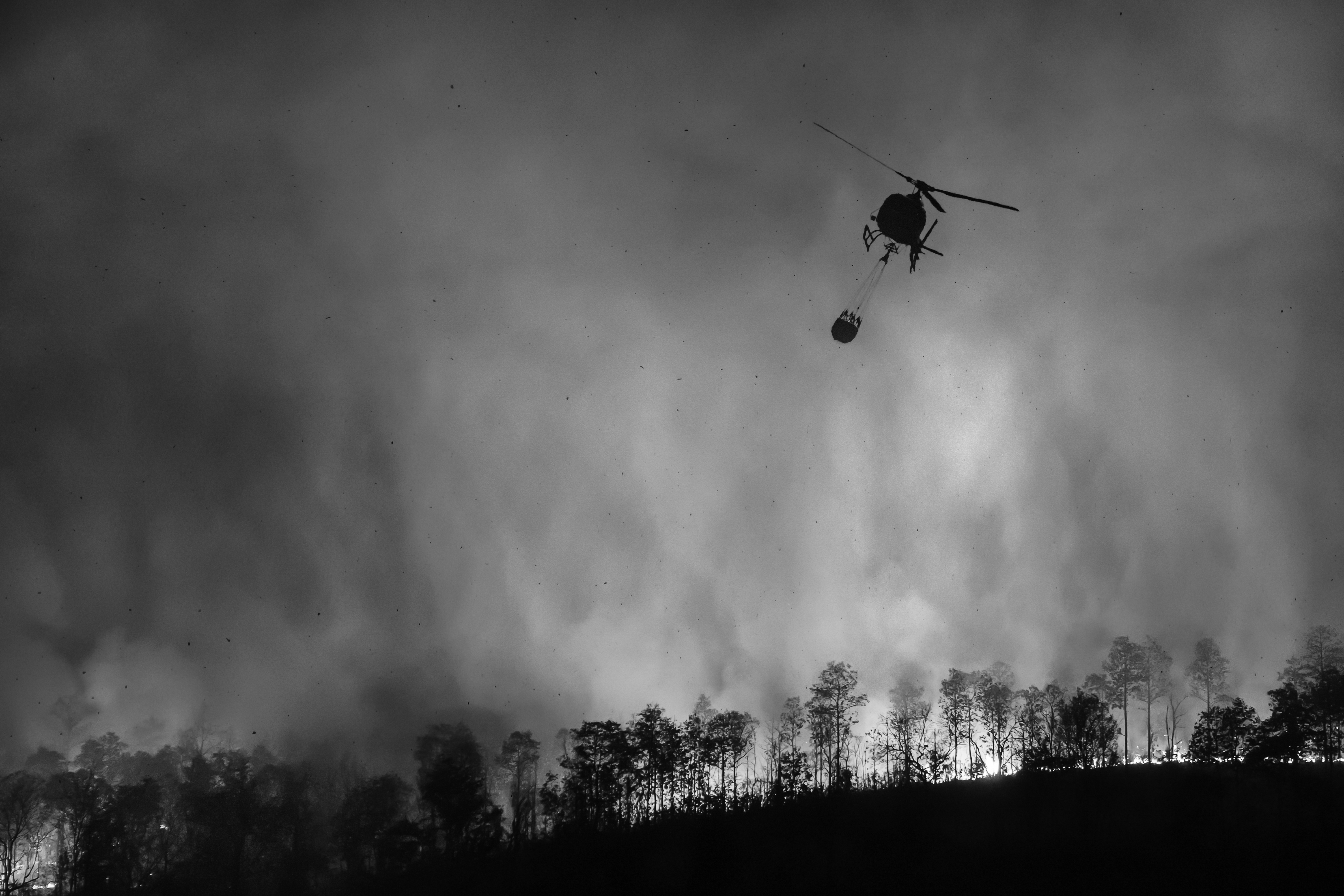
Lower Wildfire Premiums Shouldn’t Distract from Ongoing Risk
- Insureds should carefully review policies for wildfire exclusions and high deductibles that could impede recovery following a major loss.
- Wildfire underwriting remains highly scrutinized, with insurers evaluating defensible space, vegetation management, water access and other mitigation measures now more than ever.
- Rising construction costs, inflation and resource shortages following catastrophic events can leave properties underinsured if values have not been updated to reflect current rebuilding costs.
The property market is finally offering some welcome relief, with rates softening across many segments – including areas where wildfire and severe weather risks remain. However, lower premiums shouldn't distract insureds from the need to understand how those exposures are reflected in their coverage.
The Mountain West region
The Mountain West is a broad region that presents a unique property landscape. It covers 8 states, spanning the Rocky Mountains and Intermountain West. It includes Colorado and neighboring states like Arizona, Colorado, Idaho, Montana, Nevada, New Mexico, Utah and Wyoming, along with mountain communities, resort towns and foothill areas where wildfire exposure plays a significant role in property insurance decisions.
Insureds face significant catastrophe exposure no matter where they're located. The area east of Denver is prone to severe convective storms, hail and tornado activity. For areas further west, into the mountains and foothills, spanning the entire front range of the Rocky Mountains, the conversation shifts almost entirely to wildfire.
Colorado has already seen several major wildfires this year, including the Aspen Acres Fire in southern Colorado, which grew to more than 100,000 acres, and the Ferris and Gold Mountain fires on the Western Slope. Similar challenges are playing out across the broader Mountain West, where Utah's Babylon and Cottonwood fires ranked among the largest wildfires in the country during the summer of 2026.
Capacity and pricing
As property rates decline, many buyers are understandably focused on reducing costs. And after years of rising premiums, finding savings during renewal season can feel like a long-awaited win. But price should not become the sole focus.
A policy that looks attractive from a pricing standpoint may contain limitations that become painfully obvious only after a major loss. Therefore, the question shouldn't be how much premium is being saved, but rather whether critical protections are being sacrificed to achieve those savings.
Common coverage gaps
While the broader property market may be softening, wildfire and severe convective storm perils haven't disappeared. One of the biggest concerns in wildfire-prone areas is that while coverage may be available it’s not necessarily adequate.
Carriers are increasingly implementing wildfire sublimits, meaning a property may not receive its full insured value in the event of a wildfire loss. For example, a building worth $10M may be limited to only $5M in wildfire coverage, creating a shortfall of $5M in the event of a wildfire loss.
At the same time, high deductibles and wildfire exclusions are creating additional uncertainty for insureds. These restrictions can become even more problematic for borrowers with lender requirements that demand full property protection.
The result is a difficult balancing act between affordability and coverage adequacy in some of the region's highest-risk locations.
The importance of valuation
Construction costs continue to increase, driven by inflation and labor shortages. As a result, properties may be underinsured. This can be complicated by the fact that following a major wildfire, entire communities often compete for the same resources – further impacting the cost to rebuild. What may have appeared to be an adequate limit before the loss, could prove insufficient afterward.
For property owners, this makes annual valuation reviews more important than ever. Coverage that looked sufficient just a few years ago may no longer reflect today's costs, especially in areas where wildfire activity can create sudden demand for labor, materials and other resources.
Underwriting impacts
Wildfire underwriting has become far more detailed over the past several years. Simply providing a building schedule is no longer enough.
Underwriters want to understand how a property is being protected. They evaluate defensible space, vegetation management and access to water sources. They want to know what fire suppression resources are nearby and the mitigation measures implemented to help reduce exposure.
For retailers and insureds, this means presenting a complete narrative around the risk. A property with water tanks, proactive brush management and thoughtful wildfire mitigation may be viewed very differently than one that lacks those protections.
Looking ahead
Wildfire concerns are unlikely to disappear anytime soon. Population growth in mountain communities has increased exposure, while drier conditions have heightened concerns across much of the region. A winter with below-average snowfall can quickly translate into higher wildfire potential as vegetation dries out.
Although new programs and markets may continue to emerge, underwriting scrutiny is expected to remain high. If wildfire activity continues, carriers may become even more selective about the business they are willing to write.
The softening property market presents an opportunity for insureds to improve pricing, but it shouldn't come at the expense of coverage quality. In a region where hailstorms, tornadoes and wildfires remain a constant threat, now is the time to review policies, revisit property values and identify coverage gaps.
We help you win
The best time to prepare for wildfire is before it starts. Retailers should work with an experienced wholesale broker who specializes in wildfire risks and understands how early conversations about pricing and coverage expectations can help structure placements and budgets.
Amwins property specialists work with you to help your clients understand their unique risk exposures and can further detail how mitigation and suppression strategies may make submissions more attractive to insurance underwriters.
Our team of expert brokers serves as your partner in providing insurance solutions that best meet your client’s needs. We collaborate on risks and draw on our global network to deliver unmatched insurance solutions to our clients.
Contact your Amwins broker today.
- Derek Tomasek, AVP, Amwins Brokerage
- Property
- Property